
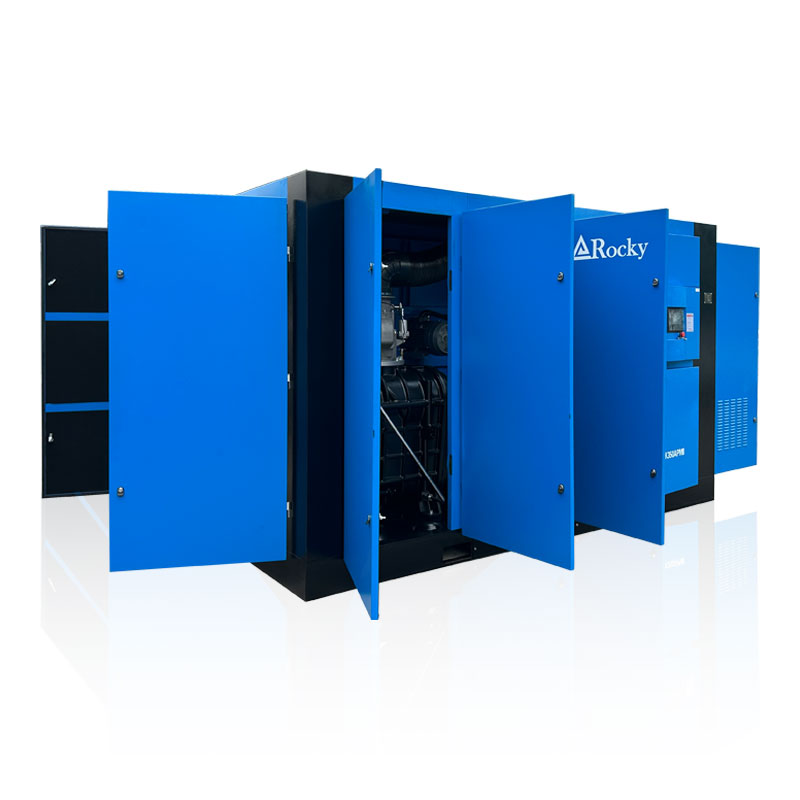
For companies that are highly concerned about air quality, the presence of excessive oil in the air is crucial. There are many reasons for this problem, mainly including the following: 1. Excessive oil level; 2. Blockage of the oil return pipe filter or orifice; 3. Damage to the oil-gas separation core; 4. Low compressor discharge pressure; 5. Malfunction of the minimum pressure valve; and finally, problems with the lubricating oil itself. If there is too much foam in the lubricating oil, the oil content in the gas will also increase.
1. Excessive Cooling Oil Added to the Compressor
Adding too much lubricating oil, exceeding the allowed range, can cause this problem. During compressor operation, although the separation system separates the oil and gas, some cooling oil will still be carried into the gas and discharged, resulting in excessive oil content in the exhaust gas.
2. Oil Return Pipe Malfunction
In the operation of a screw compressor, the oil return pipe plays a crucial role. A pressure difference is created between the oil separator and the compressor inlet. Under this pressure difference, the oil return pipe is responsible for returning the oil collected at the bottom of the oil separator back to the compressor for continued use during the next compression cycle.
If the oil return circuit is blocked, broken, or incorrectly installed, the accumulated oil at the bottom of the oil separator cannot be returned to the compressor, resulting in excessive oil accumulation at the bottom. This excess oil is then lost as it is carried out with the discharged gas, causing oil contamination in the exhaust.
3. Damaged Oil Separation Core
During the operation of a screw compressor, if the oil separation core is damaged, such as cracking or perforation, it loses its oil-gas separation function. This means that the mixed gas is directly connected to the compressor exhaust pipe, and a large amount of cooling oil is not separated and is discharged with the gas, causing oil contamination in the exhaust.
4. Minimum Pressure Valve Malfunction
During the operation of a screw compressor, the minimum pressure valve ensures that the system pressure remains above the minimum pressure during operation. If the minimum pressure valve malfunctions, the minimum system pressure cannot be guaranteed.
Because the air consumption of the equipment is very high, the system pressure will be too low, and the oil return pipe will be unable to return oil. The oil accumulated at the bottom of the oil separator will not be able to return to the compressor and will be discharged from the compressor along with the compressed gas, leading to oil carryover problems during the discharge process.
5. Unqualified cooling oil quality
If lubricating oil with poor anti-foaming properties is added to the compressor, or if the ambient air humidity is high, or if there is water leakage at the bottom of the lubrication oil station, the lubricating oil will foam, leading to an increase in oil content in the exhaust gas.