
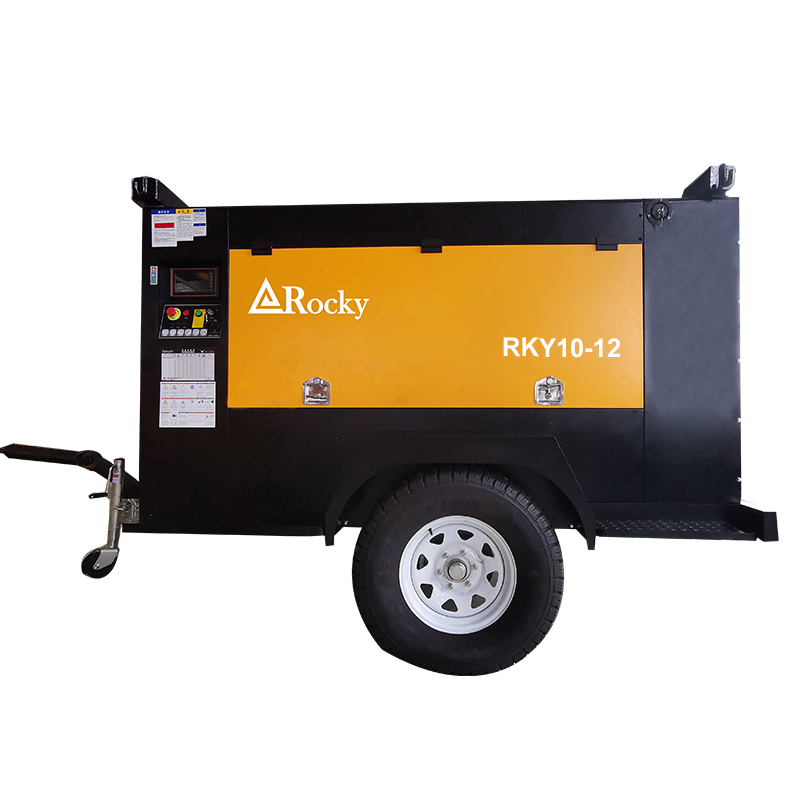
High discharge temperature in screw compressors is a common problem, and therefore many articles analyze this issue. This article will not elaborate on all of them, but will summarize the causes from two aspects: mechanical faults and lubricating oil.
Mechanical faults include:
a. Oil stop valve malfunction;
b. Compressor oil filter malfunction;
c. Thermal control valve (temperature control valve) malfunction;
d. Compressor oil quantity regulator malfunction;
e. Compressor oil cooler malfunction (this fault is common in water-cooled compressors);
f. Compressor head malfunction, including poor lubrication and problems with the head's design or installation;
g. Air filter malfunction;
h. Oil-gas separator malfunction;
i. Temperature sensor and computer malfunction, resulting in abnormal readings.
The impact of compressor oil includes:
a. Insufficient compressor oil;
b. Deterioration of compressor oil, resulting in poor fluidity and reduced heat exchange capacity;
c. Improper selection of compressor oil viscosity;
d. Poor quality of compressor oil: poor thermal oxidation performance, poor viscosity-temperature characteristics, poor air separation ability, etc.