
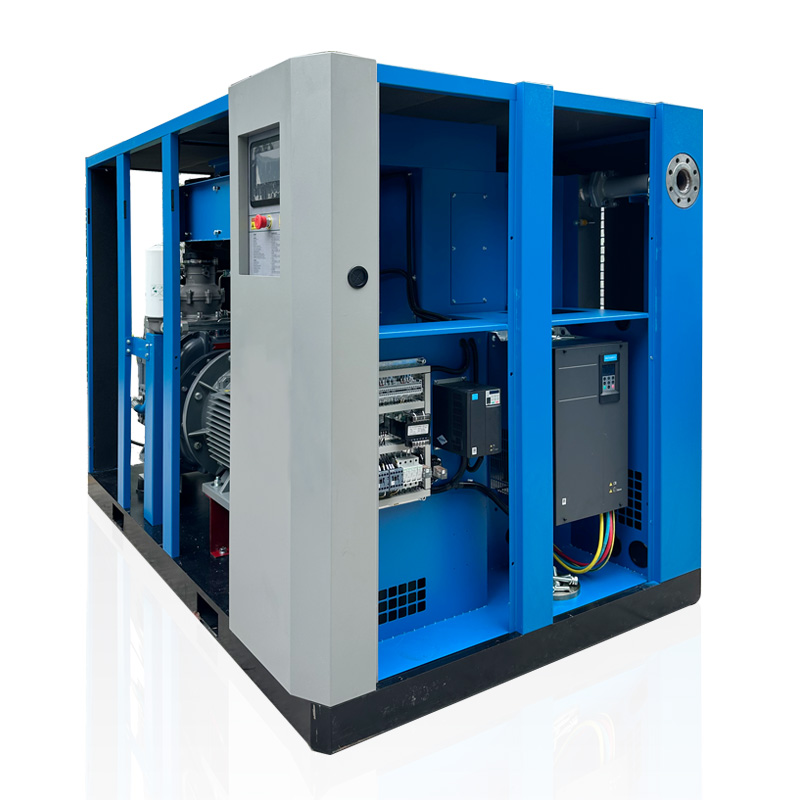
The following situations significantly increase the likelihood of rust on screw compressor heads:
1. Condensation from oil oxidation, caused by prolonged periods of inactivity, flows back into the compressor head, leading to rust.
2. During operation, a low fan temperature setting results in consistently low oil temperatures, causing oil deterioration and emulsification, which in turn leads to rust on the compressor head.
3. A mismatch between air discharge and air consumption, or insufficient load time, allows water to seep into the compressor head, causing rust.
4. Prolonged operation at low temperatures prevents moisture from evaporating, also resulting in rust.
5. Failure to promptly drain water from the air tank allows it to flow back into the main unit, causing rust.
Solutions:
1. Appropriately extend the compressor's unloading time (when no-load), artificially raising the oil temperature to above 85 degrees Celsius (90 degrees Celsius is suitable).
2. When air consumption is low, after shutting down the screw compressor for 6 hours, periodically drain the condensate from the oil-air separator until oil is visible flowing out. (The frequency of venting depends on the operating environment of the screw compressor.)
3. For users with very low air consumption, adjust the operating temperature of the cooling fan appropriately.
4. Drain the water from the oil-gas separator once a week. Draining method: Before starting the machine in the morning, open the drain valve of the oil-gas separator until a small amount of lubricating oil flows out, then close the valve.