
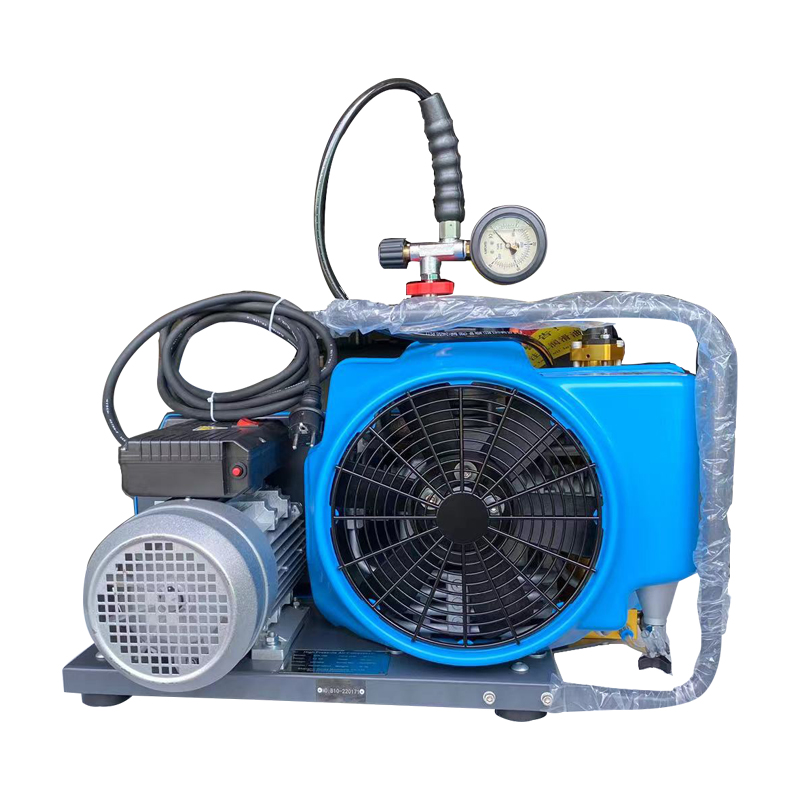
Sometimes screw compressors make unusual noises during operation. What causes this? Let's find out and find suitable solutions.
1. Loose belt causing slippage. Solution: Adjust the belt tension by turning the adjusting bolt to the appropriate level, with a deformation of less than 5mm, but not too tight. If slippage persists after restarting, the belt needs to be replaced. However, do not replace only one belt, as inconsistent belt tension can easily cause future damage. Also, remember not to drip lubricating oil onto the belt.
2. Insufficient lubricating oil in the screw compressor's male and female screws. Solution: Check the oil level, replace the oil filter, address the faulty component, adjust the system configuration, and add oil to the main unit up to 3/4 of the rotor's capacity. For screw compressors that have not been used for a long time, add sufficient oil to the compressor head before starting it.
3. Intake valve malfunction causing air leakage. Solution: Replace the faulty valve.
4. Motor bearing malfunction. Methods: 1. Obvious rolling element vibration indicates excessive clearance; replace the rolling elements. 2. A muffled sound indicates excessively dirty grease; clean and replace with new lubricating oil. 3. A sharp sound indicates insufficient lubrication; add appropriate lubricating oil.
5. Main unit malfunction. Method: Inspect the main unit.
6. Loose screws or other small objects. Method: Due to the high-frequency vibration of the main unit during operation, some small parts may become loose; tighten them appropriately.