
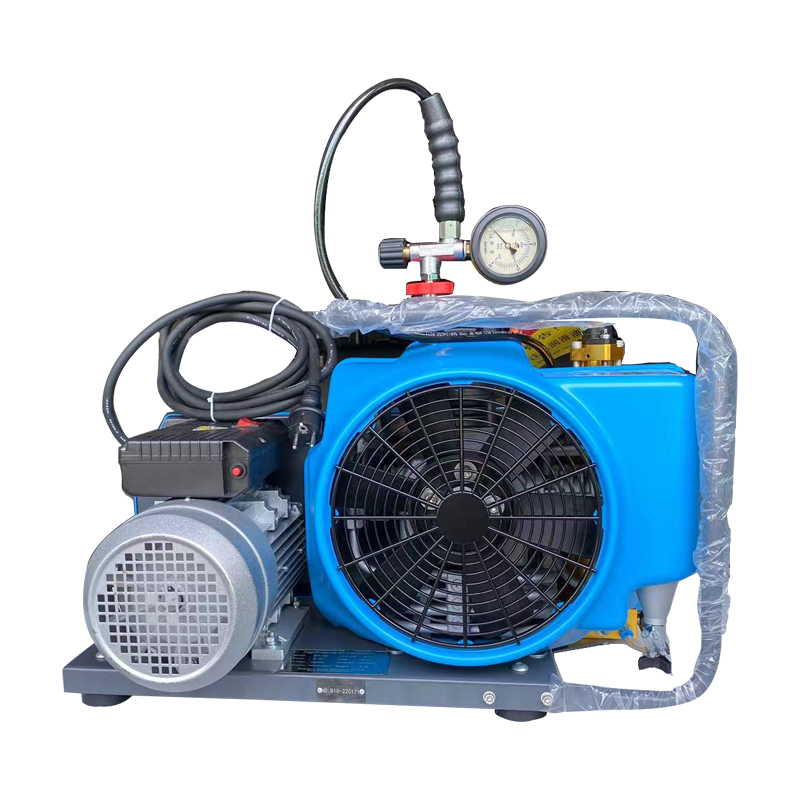
In some specialized manufacturing industries, there are high requirements for the gas discharged from screw air compressors, especially in textile and food industries. Essentially, the oil content of the compressed air must be extremely low, ideally achieving oil-free compressed air. So, how do we solve this problem when oil is present in the discharge of a screw air compressor?
1. Damaged Oil-Gas Separator Core
If the oil separator core is damaged, broken, or perforated during operation, the screw air compressor loses its oil-gas separation function. This means the mixed gas and the compressor's discharge pipe are directly connected, so a large amount of oil is not separated and is discharged with the gas, leading to oil contamination during use.
Solution: Damage to the oil-gas separator core is a common problem. Therefore, the equipment should be inspected before operation, and operating procedures should be strictly followed during use. Regular maintenance should be performed after use. If damage or perforation is found in the oil separator core, it should be replaced promptly to ensure the normal operation of the equipment.
2. Oil Return Line Fault
During the operation of a screw compressor, the oil return line plays a crucial role. A pressure difference is formed between the oil separator core and the compressor inlet. Under this pressure difference, the oil return line is responsible for returning the oil collected at the bottom of the oil separator core to the compressor for reuse in the next cycle. If the oil return line is blocked, ruptured, or improperly installed, the oil accumulated at the bottom of the oil separator core cannot be returned to the compressor, leading to excessive oil accumulation. This excess oil will then be discharged with the gas, resulting in oil during the exhaust process.
Solution: If the oil return line is blocked during equipment operation, check the pressure drop of the separator. If the pressure drop is not problematic, clean the oil separator core. If the oil separator core is damaged, replace it immediately.
3. System Pressure Control Too Low
During the operation of a screw compressor, if the system pressure control is too low, the gas flow rate inside the separator will be too fast, and the separator's effect will not be fully realized. This will cause the separator core to enter the next connection. The oil content in the internal gas will be too high, exceeding its separation range, resulting in incomplete oil-gas separation and oil carryover during compressor exhaust.
Solutions: 1. **Operators should be familiar with the equipment's control pressure.** When a problem is detected, the system load should be reduced to bring the system pressure back to the rated operating pressure.
4. **Low-Pressure Valve Failure:** During screw compressor operation, the low-pressure valve ensures the system pressure remains above the low-pressure level. If the low-pressure valve malfunctions, the system's low-pressure level cannot be guaranteed, leading to oil leakage during discharge.
**Solution:** In practice, if the low-pressure valve is found to be faulty, it must be replaced before resuming operation.
5. **Excessive Cooling Oil Addition:** If too much cooling oil is added before the screw compressor starts operating, the high oil level during operation will cause gas to be discharged, even though the separation system separates the oil and gas. Cooling oil will mix with the discharged gas, resulting in excessively high oil content and causing oil leakage.
**Solution:** When adding cooling oil to the compressor, the theoretical value of the required amount must first be understood. Cooling oil addition should be handled by a designated person, and the level should generally be controlled below the middle of the sight glass. 6. Substandard Cooling Oil
If substandard cooling oil is added before the compressor starts operating, or if the cooling oil has exceeded its service life, it will fail to achieve the desired cooling effect. During the screw compressor's operation, the cooling oil will lose its effectiveness and will not be able to cool or separate the oil and gas. This will lead to oil malfunctions during the exhaust process.
Solution: Cooling oil should be added strictly according to the equipment's requirements, as different equipment has different requirements. The time of addition should be recorded after each addition. The cooling oil should be replaced promptly when it reaches its service life. The quality of the added cooling oil should be strictly controlled to prevent the use of substandard cooling oil.