
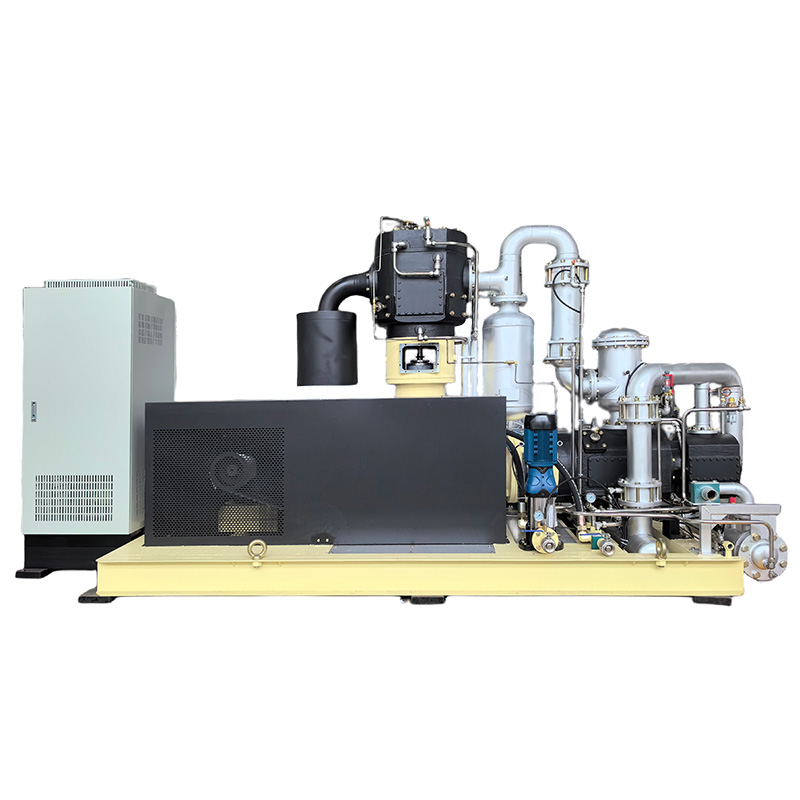
1. **Preparation Before Disassembly**
Prior to disassembly, the procedure must be carefully planned in advance. Based on the specific structural characteristics of each air compressor component, a logical disassembly sequence should be selected to avoid working out of order or creating confusion.
2. **Disassembly Sequence**
The disassembly sequence generally proceeds in the reverse order of assembly: external accessories are removed first, followed by internal components; sub-assemblies are dismantled from top to bottom; and individual parts are removed last. Under no circumstances should excessive force be used during disassembly, as this may result in the deformation or damage of components.
3. **Disassembly Tools**
During disassembly, specialized tools must be utilized to ensure that no damage is inflicted upon the machine's parts.
For instance, when removing components from the air compressor or compressed air purification unit, a hydraulic press should be used to press them out, or a specialized puller tool should be employed to extract them; the direct use of a hand hammer to strike these parts is strictly prohibited.
For large-scale air compressors, individual parts are often heavy. During disassembly, lifting equipment and slings should be prepared; care must be taken to protect the parts during rigging and hoisting to prevent bruising or damage.
4. **Proper Placement of Parts**
Once removed, components should be placed in appropriate locations. Critical components should not be placed directly on the ground but should instead be rested upon wooden blocks or supports; small parts should be placed in containers and covered with lids; and precision parts require special handling and storage.
Whenever possible, removed parts should be grouped together according to their original structural arrangement. Components that form a matched set or are non-interchangeable must be marked prior to disassembly to prevent assembly errors that could compromise the quality of the reassembly process.