
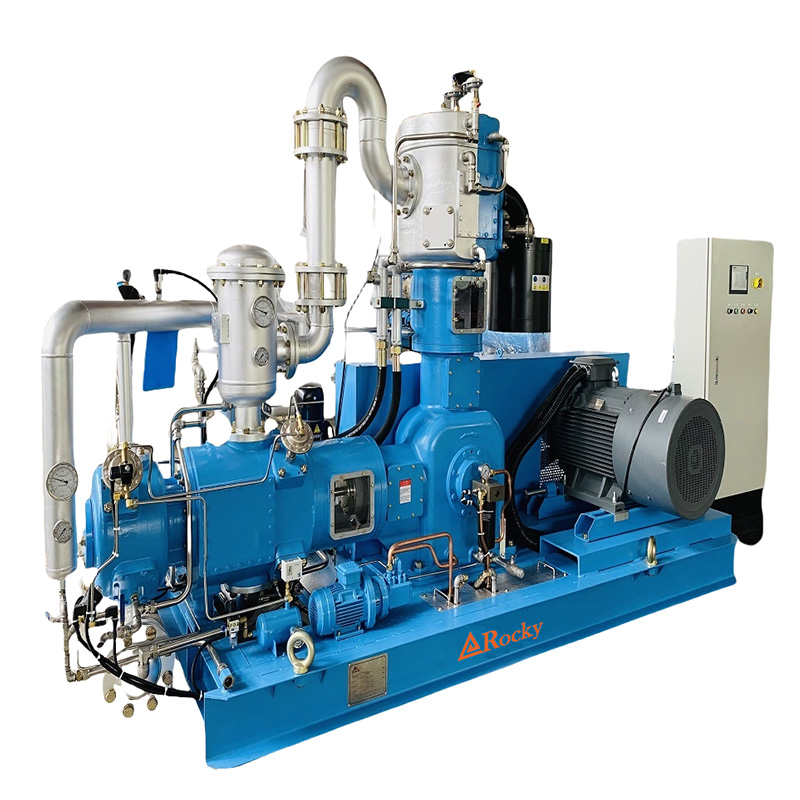
Oil-laden condensate from the compressor flows under pressure into the oil-water separator, passing through the first-stage filter (typically a pre-filter). A pressure relief vent is usually present at this stage to help reduce the pressure within the separator tank and prevent turbulence, thereby facilitating the gravity-based separation of free oil.
First-Stage Filtration
The first-stage filter typically consists of polypropylene fiber media that absorbs oil while repelling water. This means that oil droplets adhere to the surface of the polypropylene fibers. Due to their oil-absorbing properties, such filter media are referred to as "oleophilic" fibers. This media typically floats on the water's surface; however, as it adsorbs an increasing number of oil droplets, it becomes heavier and sinks deeper into the water as it approaches the end of its service life.
Second and Third-Stage Filtration
After passing through the first-stage filtration, the condensate flows through the main filtration section. This includes a second-stage filter and, in some cases, a third-stage filter. These filters typically rely on activated carbon (or organic clay, in cases of higher emulsification) to purify and "polish" the condensate. Essentially, the condensate flows through the activated carbon or organic clay (depending on the specific type and specifications of the oil-water separator) across one or two consecutive filtration stages.
The Final Step
At the conclusion of this process, any residual oil remaining in the condensate is captured. At an ambient temperature of 20°C, the condensate contains approximately 1–2 g/m³ of oil after completing the first-stage filtration; by the time the condensate exits the oil-water separator, only about 2–3 mg/m³ of residual oil remains.
The remaining water has been thoroughly decontaminated and can be safely discharged into the sewer system, marking the completion of the oil-water separator's task. Ultimately, everyone benefits: companies remain compliant with regulations—avoiding potential fines—while our environment is simultaneously protected.