
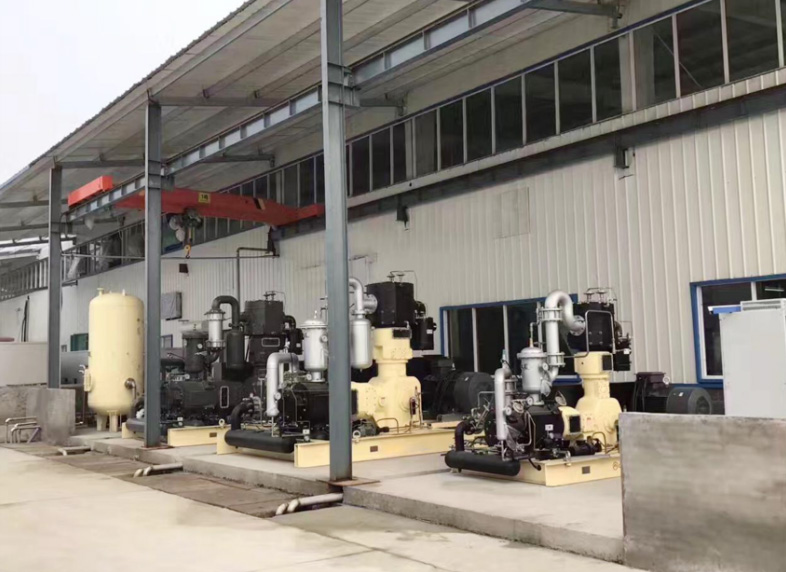
Many people tend to confuse air compressors with general compressors. A common misconception is that an air compressor is simply synonymous with a compressor. In reality, however, they are two distinct types of mechanical equipment: an air compressor specifically refers to a machine designed to compress air, whereas compressor is a much broader, overarching concept. Below, the team at Sali introduces the key distinctions:
What is an Air Compressor?
An air compressor is, quite simply, a machine designed to compress air. It is a mechanical device primarily used to reduce the volume of air, and it finds application in a wide variety of settings. For instance, a common function of an air compressor is to compress air for use as a power source—a practice widely utilized within the power generation industry. Furthermore, air compressors can be employed for refrigeration, gas separation, gas transport, and various other purposes. They play a vital role in both our daily lives and professional work environments.
What is a Compressor?
Compressor serves as a collective, generic term. There are numerous types of compressors, including refrigerant compressors, hydrogen compressors, air compressors, and many others. An air compressor represents just one specific category within this broader group; its specific medium for compression is air, whereas a general compressor can be designed to compress a wide range of substances—not just air. Thus, the air compressor is subsumed within the overarching concept of a "compressor," existing as one specific variant among many.
The general public often assumes that a gas pump (or air pump) is the same thing as an air compressor. Historically, the term gas pump referred specifically to piston-type air compressors. However, modern air compressors come in a much wider variety of types—such as screw air compressors, oil-free air compressors, and energy-efficient variable-frequency air compressors. Consequently, there are fundamental differences in the operating principles between traditional gas pumps and modern air compressors.
Let us take the screw air compressor as an example. The working cycle of a screw compressor can be divided into three distinct stages: intake, compression, and exhaust. As the rotors rotate, each pair of intermeshing lobes successively completes this identical working cycle.
The Intake Process: As the rotors turn, the space within the helical grooves of the male and female rotors reaches its maximum volume just as it aligns with the opening in the intake-side end plate. At this moment, the rotor grooves establish a direct connection with the intake port. Since the gas within the grooves was completely expelled during the preceding exhaust phase—leaving the grooves in a near-vacuum state upon the completion of exhaust—external gas is immediately drawn in as the grooves rotate past the intake port, flowing axially into the helical channels of the male and female rotors. When the gas completely fills the rotor grooves, the intake-side face of the rotor rotates away from the casing's intake port, thereby sealing off the gas contained within the grooves.
Compression Process: At the conclusion of the intake phase, the tips of the male and female rotor lobes seal against the casing; at this point, the gas within the grooves can no longer escape. The meshing interface between the rotors gradually shifts toward the discharge end. The volume of the groove space situated between the meshing interface and the discharge port progressively diminishes, causing the gas within the grooves to be compressed and its pressure to rise.
Discharge Process: When the meshing interface of the rotors rotates into alignment with the casing's discharge port, the compressed gas begins to be expelled. This process continues until the meshing interface—formed by the rotor lobe tips and the grooves—reaches the discharge-side face of the casing. At this juncture, the volume of the groove space between the rotors' meshing interface and the casing's discharge port becomes zero, marking the completion of the discharge process. Simultaneously, the length of the groove space between the rotors' meshing interface and the casing's intake port reaches its maximum extent once again, and the intake process recommences.