
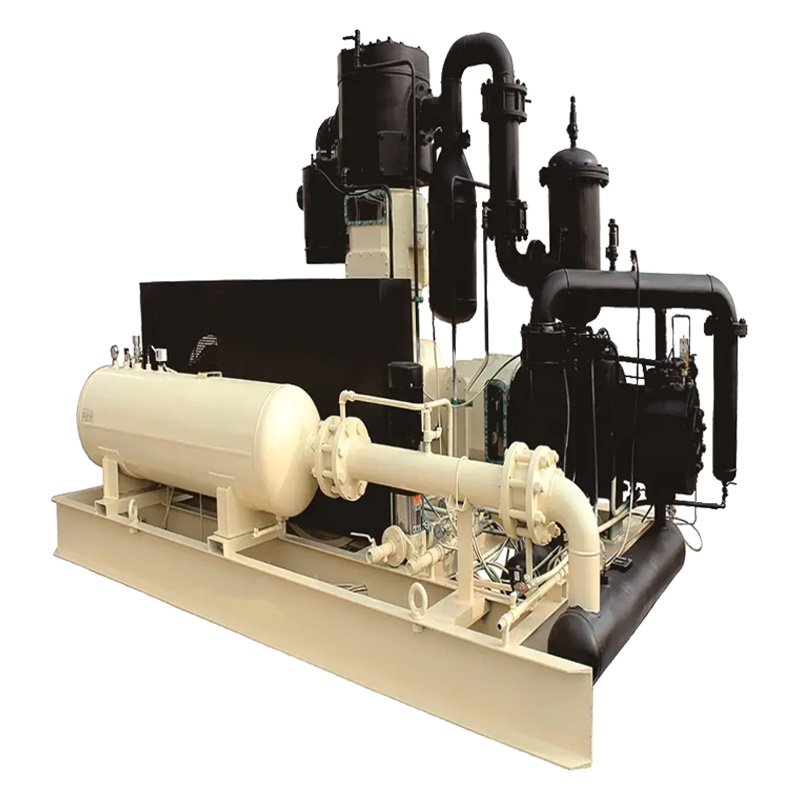
Compressors are notorious for their high noise levels, which significantly impact both people and the environment. So, how do factories eliminate this noise? Today, let’s visit a power plant to see how they handle it.
Compressor rooms in power plants tend to be very noisy, so sound barriers are commonly installed. The thickness of these barriers is customized to meet specific client requirements. Generally speaking, how thick are the sound barriers used in power plant compressor rooms? The basic principle behind these barriers is to convert specular reflection (mirror-like reflection) of sound waves into diffuse reflection using a rough surface, thereby reducing noise levels.
The term "sound barrier" can also refer to movable wall panels used in recording studios or film sets; typically, one side features sound-absorbing material, while the other consists of sound-insulating and reflective material. Their function is to minimize sound leakage (crosstalk) between different sound sources within the studio or to adjust the sound quality by utilizing the differing acoustic properties of the panel's two sides.
Constructing Sound Barriers for Compressor Rooms:
A compressor room sound barrier system primarily consists of a foundation, barrier panels, steel uprights (posts), fasteners, and seals. The uprights serve as the main structural support and must be installed perfectly vertical to the ground. The barrier panels are high-performance components that both absorb and block sound. Common materials include metal sound-absorbing panels (such as galvanized steel or aluminum) featuring louvers, micro-perforations, or corrugated/textured surfaces. Transparent sections typically utilize 5+5mm laminated glass or solid polycarbonate sheets. These panels are usually secured into the grooves of the uprights using spring clips to form a complete sound barrier system.
Sound Barrier Thickness for Compressor Rooms:
While greater thickness improves sound insulation performance, it also increases costs; consequently, standard sound barriers for machinery and equipment are typically 80mm thick. Installation location for sound insulation walls in power plant compressor rooms:
Ideally, these should be positioned as close as possible to the various items of machinery and equipment. To minimize costs, they are typically installed on the facility's existing concrete walls or alongside the wall structure using separate uprights; if the required height exceeds that of the existing wall, the sound insulation panels are mounted onto these uprights.