
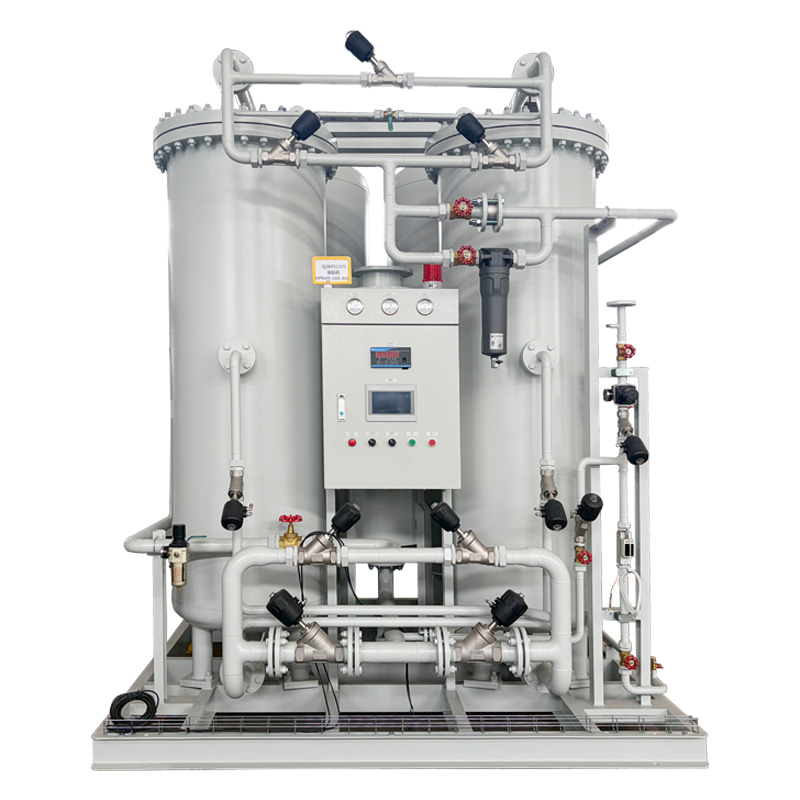
Industrial oxygen generators are devices that separate and purify oxygen from the air to supply high-purity oxygen for various industrial purposes. This article explores these types and their applications across different sectors in detail, helping to better understand their functions and advantages.
I. Main Types of Industrial Oxygen Generators
1. Pressure Swing Adsorption (PSA) Oxygen Generators
PSA oxygen generators represent the most widely used oxygen production technology today. They primarily separate oxygen and nitrogen from the air through processes of adsorption and desorption. The working principle is as follows:
Air first passes through a pretreatment system (such as filtration and moisture removal) to eliminate impurities.
Inside the adsorption tower, the air is compressed and passed through molecular sieves. These sieves selectively adsorb nitrogen while allowing pure oxygen to pass through.
As pressure fluctuates, the adsorption capacity of the molecular sieves changes, enabling the extraction of oxygen.
PSA oxygen generators offer the advantages of a simple structure, low energy consumption, and a stable oxygen supply. They are suitable for most industrial scenarios requiring high-purity oxygen, such as metallurgy, fertilizer production, and glass manufacturing.
2. Cryogenic Liquefaction Oxygen Generators
Cryogenic liquefaction oxygen generators utilize the principle of low-temperature air liquefaction, cooling the air to transform it into liquid oxygen. This technology is primarily suited for industries requiring large volumes of oxygen. The specific operational steps are as follows:
Air is compressed to high pressure by a compressor and subsequently passes through a cooling unit.
The air is cooled to extremely low temperatures until it liquefies, allowing liquid oxygen to be separated from nitrogen.
The liquid oxygen passes through an evaporator to convert back into a gas and is ultimately delivered via pipeline to the point of use.
Cryogenic liquefaction oxygen generators offer high oxygen output, making them ideal for large-scale industrial applications—particularly in sectors requiring long-term, continuous oxygen supplies, such as aerospace and steel production.
3. Membrane Separation Oxygen Generators
Membrane separation oxygen generators separate gases in the air using specialized membrane materials. These materials exhibit different permeability rates for nitrogen and oxygen, enabling oxygen purification. The working principle is as follows:
Air is compressed and passed through a membrane unit; because oxygen and nitrogen permeate the membrane at different rates, the oxygen can be collected separately. The primary advantage of this technology is its simple equipment structure and low energy consumption.
Membrane separation oxygen generators are commonly used in applications with lower oxygen demand, such as in the medical industry and small-scale industrial equipment.
4. Chemical Adsorption Oxygen Generators
Chemical adsorption oxygen generators produce oxygen by using chemical reactions to adsorb nitrogen from the air and release oxygen. The core of this technology involves using specific chemical substances (such as solid oxidizing agents) to react with nitrogen, thereby extracting oxygen. Although the operating principle is relatively complex, it can provide high-purity oxygen in certain specialized situations. Such equipment is commonly found in specialized chemical industries.
II. Application Areas for Different Types of Oxygen Generators
1. Metallurgical Industry
In the metallurgical industry, oxygen is widely used in steel production, particularly in oxygen converter steelmaking and oxygen bottom-blowing processes. PSA (Pressure Swing Adsorption) and cryogenic liquefaction oxygen generators are typically the preferred choices in this sector. They provide a stable, efficient oxygen supply, reducing energy consumption and enhancing production efficiency.
2. Fertilizer Industry
Fertilizer production—specifically the ammonia synthesis process—requires large quantities of oxygen. Cryogenic liquefaction oxygen generators are widely used in this field because they can supply the large volumes of high-purity oxygen needed to support the high-temperature, high-pressure reactions involved in ammonia production.
3. Glass Manufacturing Industry
In glass manufacturing, oxygen is used to boost combustion efficiency and temperatures, particularly during the high-temperature combustion and melting stages. PSA oxygen generators are widely used due to their low energy consumption and excellent performance.
4. Medical Industry
In the medical field, oxygen demand is typically lower, but purity requirements are high. Membrane separation oxygen generators are frequently used to supply oxygen in hospitals and nursing homes due to their low energy consumption and ease of operation. Membrane separation technology is also widely used in small oxygen generators designed for home use.
5. Aerospace and Military
The aerospace and military sectors have unique oxygen requirements, demanding extremely high purity and stability. Cryogenic liquefaction oxygen generators are widely used in these fields because they provide a large, continuous oxygen supply and meet the operational demands of extreme environments.