
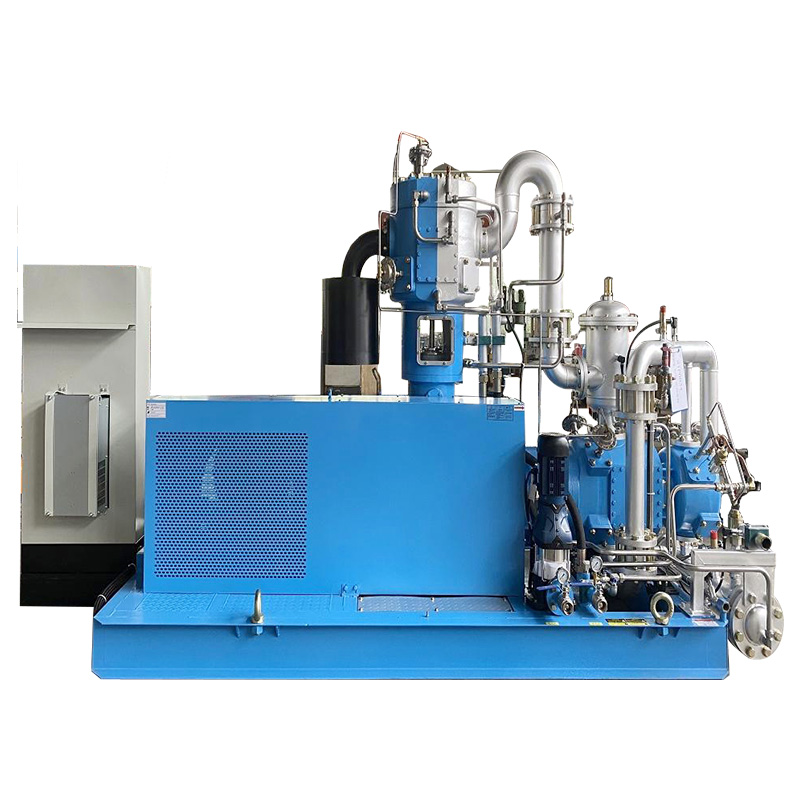
Many companies choose on-site nitrogen generation instead of relying on bulk liquid nitrogen deliveries. While initial challenges include space constraints and upfront investment, the benefits of producing high-purity nitrogen on demand often far outweigh these difficulties.
Filtration products in on-site nitrogen generation systems are crucial for maintaining a stable supply of pure nitrogen. Without proper compressed air filters, contaminants can affect the entire output.
How an On-Site PSA Nitrogen Generation System Works
A nitrogen generator doesn't just produce pure nitrogen. The process begins with a compressor generating compressed air, which naturally contains approximately 78% nitrogen. Compressed air filters remove liquids, oil, water, and other unwanted molecules from the airflow. Inside the nitrogen generator, oxygen is extracted, leaving nitrogen.
Filtration Requirements in the Gas Generation System
Before entering the nitrogen generator, the compressed air stream must undergo a pre-filtration stage to remove moisture, oil, and particles. Once inside the generator, only oxygen and nitrogen remain.
Pressure Swing Adsorption (PSA) nitrogen generators use carbon molecular sieves (CMS) to separate oxygen from the gas stream. CMS, a porous material that absorbs oxygen molecules, is packed inside the adsorption tower of the nitrogen generator.
PSA nitrogen generators typically consist of two CMS adsorption towers. While one tower is pressurized and actively removes oxygen, the other tower depressurizes and regenerates.
Field PSA nitrogen generators are typically used with a standard air compressor. Compressed air filters should be installed before and after the air compressor. High-quality pre-filtration and post-filtration support a stable nitrogen supply, reduce maintenance costs, and extend equipment life.
Pre-filtration: It is recommended to install a pre-filter upstream of the nitrogen generator to remove contaminants from the compressed air. Removing contaminants before the air reaches the compressor and generator helps extend equipment life and reduce maintenance.
High-efficiency filters can remove particles as small as 0.01 microns and support flow rates up to 1500 SCFM / 2550 Nm³/h.
Post-filtration
All PSA nitrogen generators should also include a post-filter to capture any remaining particles in the nitrogen stream. Walker Filtration dust filters remove particles as small as 0.01 microns and support flow rates up to 1500 SCFM / 2550 Nm³/h.
Advantages of On-Site PSA Nitrogen Generators
On-site installation of PSA nitrogen generators allows plants to streamline processes and maintain a consistent nitrogen supply. Purchasing bulk nitrogen externally can lead to quality fluctuations and supply delays, disrupting workflows.
The total cost of ownership for on-site PSA nitrogen generators is typically lower. They require minimal maintenance and can operate for 20 years or more before replacement. In many cases, hidden costs such as delivery fees, inconsistent quality, and shipping delays can accumulate over 12 years to equal the purchase cost of an on-site nitrogen generator.
However, there are some considerations. The initial investment can be very large, and depending on purity and flow requirements, larger and more expensive systems may be needed. Space constraints can also affect feasibility.
The Importance of Nitrogen Purity and Filtration Nitrogen generators can produce nitrogen of varying purities. Without suitable filtration products, contaminants can enter the system and compromise the nitrogen supply. Compressed air filters are also an economical and effective way to maintain efficient operation of the compressor and nitrogen generator and prevent damage.