
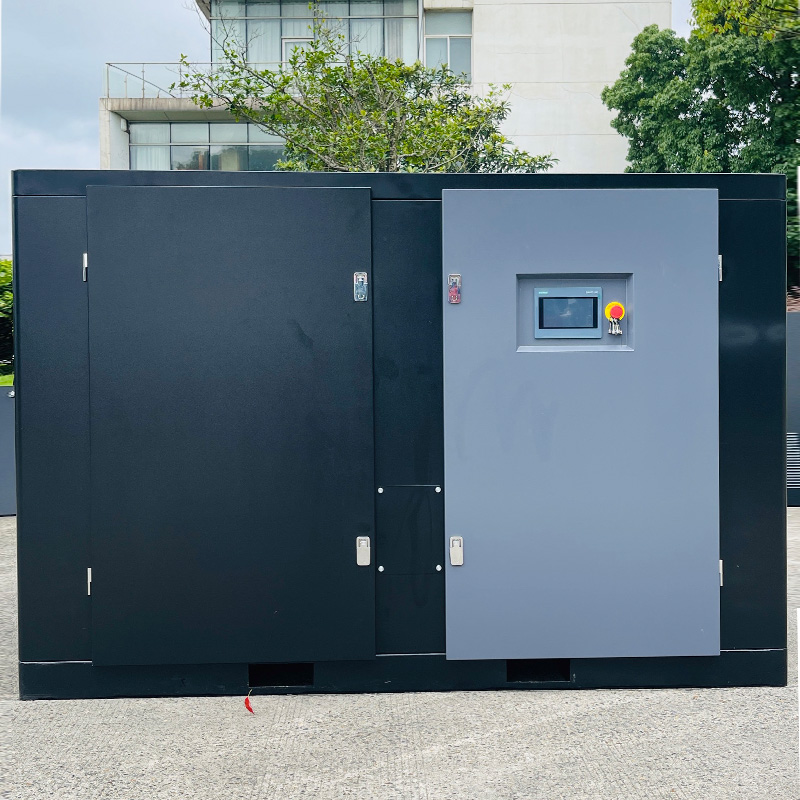
Oil-free air compressors for laboratory use are specifically designed for environments such as those found in universities and scientific research institutions. These units must be precise, highly reliable, environmentally friendly, quiet, and capable of producing clean, fresh compressed air.
Laboratory-grade oil-free air compressors are typically of the piston type. Their operating principle is as follows: a motor drives the compressor crankshaft, which—via a connecting rod—causes a self-lubricating piston (requiring no external lubricants) to move in a reciprocating motion. This action creates periodic changes in the working volume defined by the cylinder walls, cylinder head, and the top surface of the piston, thereby compressing the gas.
Given the unique requirements of laboratory environments—particularly the stringent demands regarding operational noise—such compressors must meet the following three technical standards:
1. Low Noise: The noise level of a laboratory air compressor must be kept below 60 decibels (dB). To put this into perspective, a typical household air conditioner compressor operates at around 55 dB—a level that does not cause discomfort to personnel working nearby. Since most laboratories require a quiet environment, any air compressor with a noise level exceeding 60 dB is unsuitable for use in such settings.
2. Air Dryness and Purity: Through the use of fully oil-free lubrication technology, specialized treatment of the compressor’s internal cylinder walls and the interior of the air receiver tank (often via powder coating), combined with high-quality air filters and oil-water separators, the system ensures that the output air is clean and fresh. Furthermore, the addition of a heatless regenerative dryer can ensure the air is completely dry and free of moisture.
3. Discharge Pressure Range: Industry standards dictate that oil-free air compressors intended for laboratory use must be capable of reaching a discharge pressure of 7 bar. In other words, their operating discharge pressure range must span from 0 to 7 bar.