
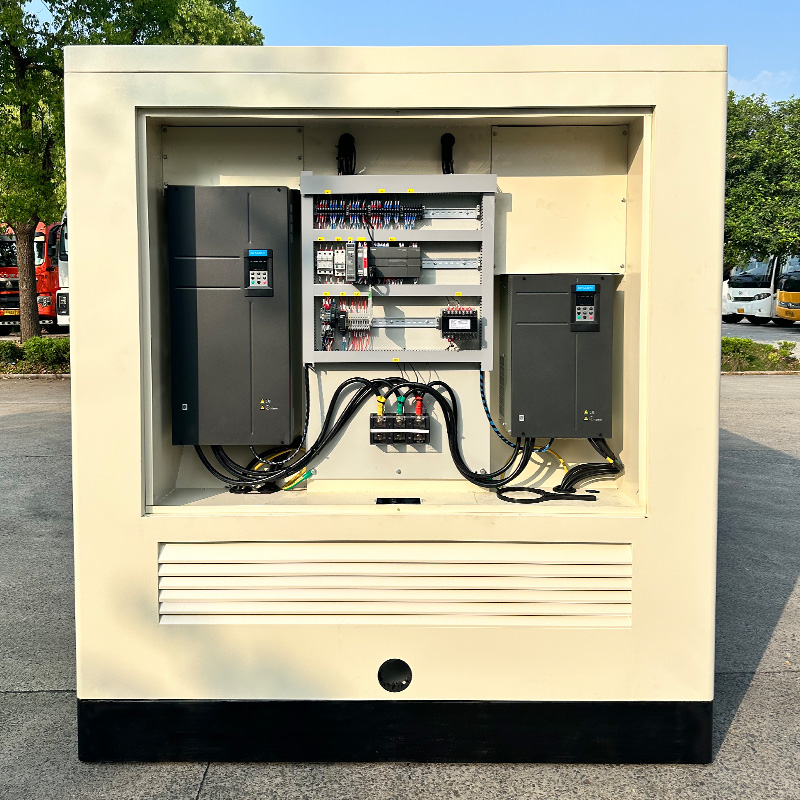
When selecting an oil-free screw air compressor, you should focus on the following core dimensions, key performance indicators, and your specific operational requirements:
1. Air Purity and Essential Certifications (Most Critical)
ISO 8573-1 Class 0 Oil-Free Certification: For industries with stringent air purity requirements—such as food and beverage, pharmaceuticals, precision electronics, or biological fermentation—it is mandatory to verify that the equipment holds a genuine TÜV CLASS 0 oil-free certification. Always request a third-party test report for the specific model, rather than relying on general claims found in marketing brochures.
Distinguish Between "Dry Oil-Free" and "Water-Lubricated Oil-Free" Types: Dry oil-free screw compressors utilize precision-synchronized gears (with no oil contact), ensuring an exceptionally high level of air purity. Water-lubricated oil-free compressors use water for sealing and cooling; in these cases, pay close attention to water quality requirements and anti-corrosion design features. Never attempt to pass off an oil-injected compressor equipped with downstream purification equipment as a true "oil-free" unit.
2. Discharge Pressure and Airflow Capacity (Operational Matching)
Discharge Pressure: The unit must be capable of meeting the maximum operating pressure required by your end-use points (including the furthest sections of your piping network and the terminal equipment). Insufficient pressure will hinder production, while excessive pressure leads to unnecessary capital expenditure and higher energy consumption.
Airflow Capacity (Flow Rate): When selecting a model, ensure the rated flow rate is slightly higher than your actual peak air demand—typically by a margin of 10% to 20%—to account for potential pressure drops in the piping or minor leaks at connections.
Demand Fluctuations: If your air demand fluctuates significantly, consider a variable-frequency drive (VSD) oil-free screw compressor. For critical applications, such as in medical facilities or continuous production lines, consider an "N+1" redundant configuration.
3. Total Life-Cycle Cost and Energy Efficiency
Energy Efficiency Rating: While oil-free screw compressors carry a higher initial purchase price, electricity costs during operation typically account for the largest share of the total cost of ownership. Prioritize models with a high energy efficiency rating (e.g., Tier 1 efficiency) or those equipped with variable-frequency drives (VSD) to optimize power consumption while meeting your specific pressure and airflow requirements. Maintenance and Consumable Costs: Consider the service life of the main air end, the wear cycle of coatings (such as those on dry, oil-free rotors), and the replacement frequency and cost of consumables like silencers and filters. For water-lubricated models, additional attention must be paid to water filtration and scale prevention.
4. Operating Environment and Installation Conditions
Ambient Temperature and Ventilation: Oil-free compressors are sensitive to ambient temperature; they should be installed in a clean facility with good ventilation, protected from direct sunlight and rain.
Space and Integration: If the available space is limited, consider integrated models—such as those with built-in air receivers and dryers—which can significantly reduce on-site installation and commissioning costs.
Noise Control: If the equipment is to be located near work areas, prioritize models with effective noise-dampening and vibration-isolation designs.