
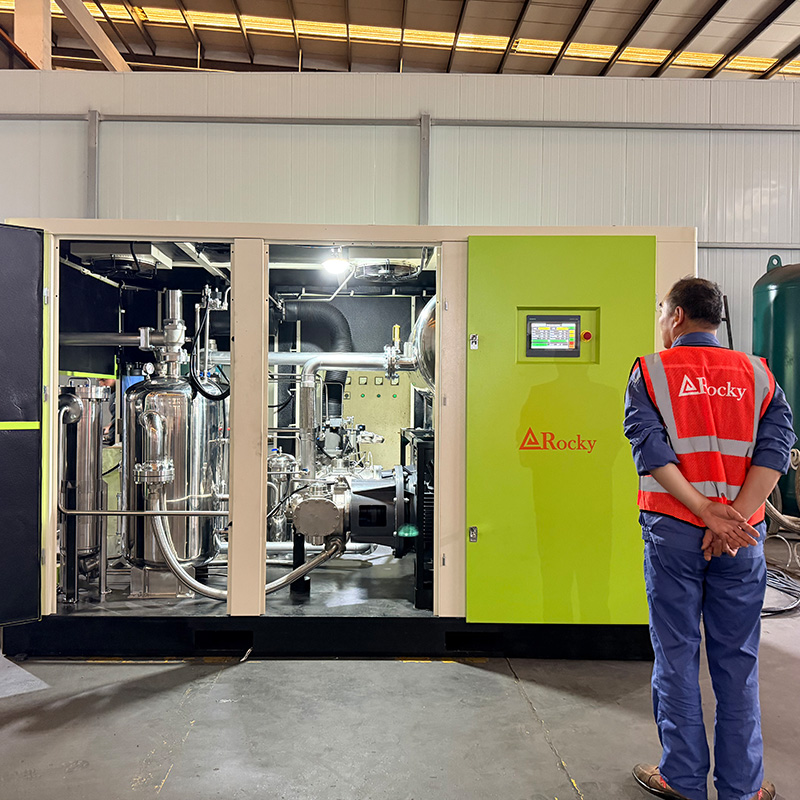
PET bottle blowing machines typically require a medium-to-high-pressure air supply (generally 18–40 bar / 260–580 psi—most commonly 28–30 bar or 3–4 MPa; for food/beverage applications, oil-free models are recommended), alongside a low-pressure air supply (approximately 6–8 bar / 87–116 psi) to power pneumatic controls, mechanical movements, and other pneumatic components within the machine.
1. Selection Based on Pressure Level and Application
Primary Air Supply for Blowing (Medium-to-High Pressure: ~18–40 bar / 3–4 MPa): Used to inflate the heated preform, stretch it, and press it against the mold to form the bottle. This can be provided by a medium-to-high-pressure screw air compressor or a combination of a low/medium-pressure compressor and a booster.
Auxiliary and Control Air Supply (Low Pressure: ~6–8 bar): Used for the operation of mechanical arms/cylinders, pneumatic valves, and conveying or packaging equipment (depending on whether the specific bottle blowing machine model includes built-in pressure-reducing valve assemblies and independent air circuits).
2. Selection Based on Oil Contamination Requirements (Oil-Free vs. Oil-Lubricated)
Oil-Free Air Compressors (Recommended for food, beverage, and pharmaceutical packaging): These prevent oil from contaminating the interior or walls of the bottles, ensuring hygiene and air purity standards (e.g., meeting "Class 0" oil-free certification).
Oil-Lubricated/Low-Oil Air Compressors (with precision filtration and post-treatment): In some non-food applications or specific operational scenarios, oil-lubricated compressors may be used. However, they must be equipped with comprehensive air-liquid separation, filtration, and drying systems to mitigate the negative impact of oil mist and moisture on the bottle-blowing process and the equipment itself.
3. Key Selection Parameters
Operating Pressure (bar / psi / MPa): Determined by the bottle size, wall thickness, mold specifications, and process requirements. Excessive pressure leads to higher electricity costs and increased strain on the equipment. Air Delivery / Flow Rate (m³/h, L/s, or CFM): This depends on the number of cavities in the blow molding machine, production capacity (bottles per hour, BPH), bottle volume, and whether the operation is continuous.
Downstream Equipment: Typically, an air receiver tank is required to buffer pressure fluctuations, along with dryers and filters to remove moisture and impurities, thereby ensuring bottle quality and extending the service life of valves.